Unknown's avatar

About Rob Hickey

Recovering business owner and engineer, thinker, writer, and fan of all things chocolate.

Notes From Darcy’s Bench

Weather-wise, camping in western Washington State in late summer is at best a roll of the dice. As autumn approaches, the calm northerly coastal winds of midyear begin their annual dance around to the south. During this shift, they also absorb more moisture from the Pacific Ocean and gain intensity as they bear down on the mountainous Olympic Peninsula that constitutes Washington’s western shore. As they encounter the Olympic Mountains, the winds are severed by the topography. Some of the wet sea air is forced up and over the peaks, losing so much moisture as rainfall in the process that actual rainforests grow and thrive there. A portion is channeled roughly east into the Juan de Fuca Strait between the peninsula and Canada’s Victoria Island to the north, and the remainder shears south along the range’s western slopes. As they reach the southern tip of the range, they bend to continue east as well. If the Olympics act like a rock in a river, then the inland Cascade Range acts more like a dam. It traps the current coming in from the Strait and turns it south, while cornering the flow coming off the southern Olympics and turning them north. These now-separate winds of common origin collide and rise over the Puget Sound, causing highly unstable updrafts. This instability, meteorologically known as a convergence zone, usually brings rain but can also cause strong thunderstorms and hail. Later in the season as the temperature drops, even snow down to sea level is possible.

The volatile nature of the phenomena makes it extremely difficult to predict the weather with any true degree of accuracy, and the forecasts leading up to our annual late summer camping trip had changed daily. This year we opted to alter both the location and the timing of the excursion, bringing us further into potential conflict with the deteriorating weather. For the last few years, we had been meeting up with a group every August to camp on Mayfield Lake in southwestern Washington, about 70 miles north of the Oregon border. This year, with one of the key couples being absent, the remainder of us elected to move the assemblage north to Whidbey Island, and postponed the gathering until a month later.

In the Northwest — perhaps in trade for the uncertain and often inclement weather — we are fortunate in that we don’t need to travel far to find locales ideally suited to camping, and our destination on Whidbey was only about two hours away by car and ferry. In a portentous moment, the first raindrops actually began to fall as I backed the gear-laden car out of the driveway on a Wednesday afternoon in the middle of September. Owing to late-breaking schedule conflicts, another difference this year is that my wife and I planned to travel and arrive separately — I would head out midweek to set up camp, and she would join us all later on Friday. Heading north on interstate 5, I had to keep increasing the tempo of the wipers to maintain visibility, and a small level of climatic concern began to set in. I beat it back with the knowledge that I was on vacation, and that a little bad weather here and there wouldn’t matter. Driving the freeway while on holiday in some ways sets you apart from the hurried and purposeful stream of drivers, as if you possess a secret independence to which they aren’t privy, and soon I let any sense of disquiet trail out behind me like the passing lane markers.

Despite a forecast calling for “mostly cloudy with a slight chance of showers,” by the time I arrived at the ferry landing in Mukilteo the rain had increased to a steady downpour – more testimony to the impact of the convergence zone on local meteorological accuracy. After more than two decades of living in Washington, I still admit to being somewhat confused by forecasts that distinguish “rain” from “showers”. It must speak to a native observational faculty which I have not yet fully absorbed, the way Inuit peoples are reported to have multiple words for the subtle varieties of snow. The ticket booth operator eyed the outdoor paraphernalia piled up nearly to my interior roof and asked, “Camping?” When I nodded over the splashes from behind my mostly rolled-up window, he smiled and said “enjoy” in such a uninflected tone that it didn’t seem to be offered so much in mockery as in acknowledgment , as in, “that’s how it goes around here this time of year.”

Even in our wondrous mechanical age, any journey over water is still a journey of consequence. A ferry ride offers the additional benefit of being a clear border in the process of travel; a physical demarcation between the past and what lies ahead, on some level signaling the leaving of one life for another. For the short twenty minutes it took to cross, I was held in wonder at the act of motion over water, and the transition from work-self to vacation-self was greatly and appreciatively accelerated. I doubted that the trip ever became ordinary or mundane even for the islanders who crossed over regularly.

Whidbey is a long, narrow, ragged C-shaped island situated near the geographic center of what is now known as the Salish Sea, a vast, spidery network of waterways consisting of the Juan de Fuca Strait, Puget Sound, the Canadian waters of the Strait of Georgia, and all their connecting channels and adjoining waters. Open to the Juan de Fuca Strait on the west, Whidbey is bordered to the east by the Saratoga Passage which separates it from Camano Island and the mainland. Our chosen campsite in Fort Ebey State Park lay about two-thirds the length of the island – all of about 30 miles — from the ferry landing at the southern end. Built in a time when some sort of attack or invasion from the Pacific was considered a viable possibility, Fort Ebey occupies Whidbey’s westernmost spur, and this outpost forms the bearing point for wind and waves making their way east from the Strait. Following the rural highways that negotiate the island’s mostly north/south axis is an exercise in gently rolling terrain flanked by tall evergreen forests, with occasional glimpses of water through the trees. The already-light traffic thins as you make your way further north, and just when you begin to feel that you may be leaving civilization altogether you reach historic Coupeville (founded in 1852 and boasting a population of around a similar number), from which you head west to Fort Ebey.

A lighter but persistent rain was still falling as I drove into the campsite. Our companions in the annual outing had arrived a few hours earlier, and were relaxing in the adjacent site. The spot we had reserved appeared to be a good one: located in the quiet periphery of the complex, not too near the park entrance or the restrooms, plenty of room and good drainage. The best feature, though, was that several small footpaths led a short distance west to intersect the park’s Bluff Trail. A mere fifteen steps or so yielded a panoramic view of the entire headlands and the shoreline hundreds of feet below. There were a series of wooden slat benches along the trail that offered respite to campers and day hikers, each bearing a small plaque with a dedication. The plaque on the bench closest to our campsite had three simple lines:

In Memory Of
Darcy Ringstad Hawkshaw
Love You Always & Forever

In subsequent searches I discovered that Darcy Hawkshaw was a fifty-five-year-old Vancouver wife and mother of two daughters who “passed away peacefully in the arms of her beloved husband, Bruce, after a courageous and strong battle with cancer” in 2005. While I never uncovered a specific connection to Whidbey Island or to this spot, in the moment it was somehow enough to know that she was loved and missed, and that someone chose this quiet setting of exceptional beauty in which to honor and preserve her memory. The bench is situated so that its occupants gaze due west, into the Strait and nearly out to sea. If there were no low rainclouds sweeping the horizon they would see the dark, undulant profile of Victoria Island in the distance on their right, unobstructed ocean in front of them, and Washington’s wind-shearing Olympic Peninsula far to the left. Even in the obstinate drizzle, the view was so captivating that I spent a few minutes with our neighbors just taking it in before returning to unload the car.

In recent years setting up camp has made me progressively more incredulous, as our equipment choices over the years have marked a steady evolution towards comfort and convenience and away from the conservation of space or weight of earlier days. On many trips in my past I have carried everything I needed to eat, sleep, travel and navigate in any weather in a pack on my back, and so I can’t help but marvel at the carload of gear we now use for just two of us. At some point the novelty of scurrying on our hands and knees to enter and exit my old alpine climbing tent wore off, and we moved to a ridiculously large walk-in model. The product literature says it sleeps six, which provides more than luxurious sleeping accommodations for two. I laugh whenever I set it up, remembering the heavy canvas tent known as the “Green Monster” our family used in my teenage years in which five of us slept like uncomfortably close deck planks. An inflatable queen-sized air mattress with an automatic inflation pump and actual sheets and pillows is an immeasurable improvement over the separate sleeping bags of former adventures, though as it has increased our comfort it has also perhaps blurred the distinction between the uniqueness of camping and the ordinary life at home. For decades, zipping up a sleeping bag was a quintessential experience of camping life, and I must admit to feeling a modicum of sadness when slipping into my now zipperless bedding. The humble zipper holds a valued place in memory, as my very first camping sleeping bag — a genuine goose down U.S. Army surplus bag you sewed shut with long leather laces — had no such luxury.

Other pieces of our camping menagerie have taken on a similarly modern bent. We replaced our first camp stove — a heavy, suitcase-sized, three-burner white gas range – several years ago. It could run on unleaded gasoline if that’s all that was available, and it could bring a gallon of water to boil in almost no time at all, but it scorched the pans and was prone to clogging. We now have a more compact and efficient two-burner stove that uses the ubiquitous small green bottles of propane gas. In perhaps a fond and sentimental nod to tradition, we still keep the white gas lantern we have had for nearly 20 years. Beyond the magic of lighting the mantles and watching them flame and then glow with increasing intensity, the hissing of the gas strikes a remembrance in me whose familiarity offsets the necessity of pumping and priming absent from newer models. The light given off by the lantern itself has a different quality to it, a softness I associate with more distant memories. A few years ago, in the middle of a rainstorm at Mayfield Lake, we drove hurriedly to the nearest town and purchased a collapsible canopy to put over the Park Service table to provide some escape from the rain other than the tent or the car. Two years ago we added a folding camp kitchen with shiny prep surfaces and storage shelves. There are new pots and pans and coffee makers and tablecloths and clotheslines and washing buckets and all manner of utensils geared to make us more comfortable and efficient. Of course this complexity didn’t simply happen, it has evolved over many years and many trips and I have been complicit in its expansion, but when compared to the relative simplicity of our early outings it does give us pause.

By around seven (do traditional notions of time really matter when camping?) the sun was already setting, abandoning the sky nearly two hours earlier than its peak in late June, and I found myself rushing to prepare dinner — partly because I had not yet slowed to the more measured pace of camp life, and partly from the experience that nightfall adds a degree of complexity to even simple tasks. In the absence of electricity, it takes other resources (usually fuel or batteries) to extend the day into night. Dinner itself was a simple and hearty affair: a bowl of reheated stew with bread and an apple for dessert, accompanied by a decent merlot. I ate steadily, with a slightly affected unhurriedness, scribbling in my journal and listening for changes in the rain’s constant patter on the canopy overhead. There is something comforting and almost ceremonial about lighting the lantern and putting water on the stove to boil for cleanup. It’s the final chore, a sign that the day is drawing to a close, a further enticement to slow down. Like taking the ferry between fixed points of land, the first night in camp is a transition, a shift to a new and more gradually unassertive normal.

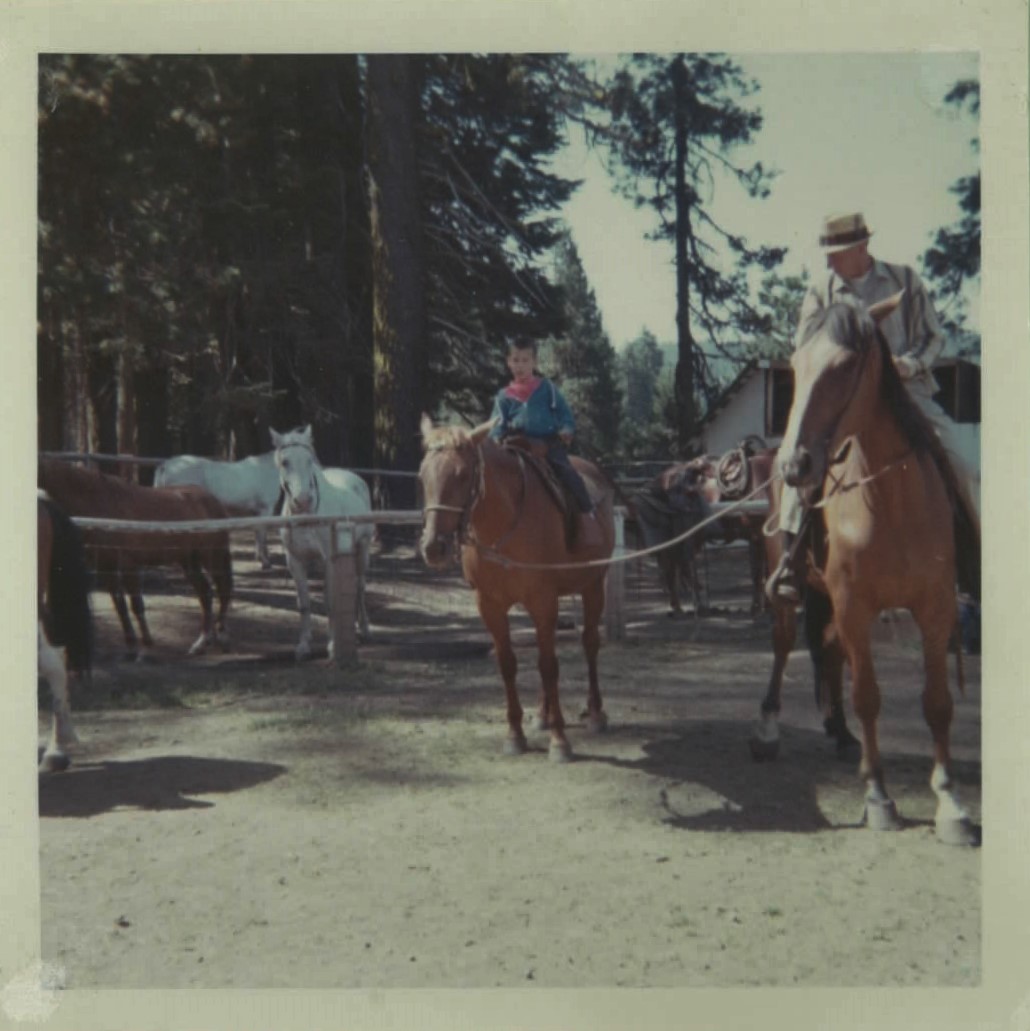
With dishes done and wine refilled, I returned to journaling. My earliest recollections of camping — other than in living-room forts made from chairs, couch pillows and bed sheets — are of trips with my family and grandparents to Child’s Meadow Resort, a year-round resort outside the entrance to Lassen Volcanic National Park in northern California. We made the trip north from my home town of Elk Grove for several summers in the late sixties and early seventies, though our accommodations varied. Sometimes we stayed in the resort cabins, another year I remember a pop-up trailer tent, and one year my parents even rented a full-size RV. Mostly I remember nonstop outdoor activity: shuffleboard, swimming, fishing, horseback riding and hiking. I remember excitement at the prospect of exploring the nearby ice caves, though even in our later trips I was considered too young for this particular undertaking. A favorite fixture was the resort general store where I remember walking on the squeaky, uneven floorboards to buy a comic book or a U-No candy bar with my pocket change. Smell has an uncanny way of grounding us in a particular time and space, and every now and then I will catch a hint of something, a mixture of food, dust and age, that makes me feel like I’m six years old with a pair of quarters in my hand. The resort still exists in the same location today, but I imagine the shuffleboard courts and the general store as I knew them have long since gone.

From trips to the beach at Fort Bragg in a neighbor’s aluminum trailer, to backpacking and summer camps in the Sierra Nevada Mountains to fishing retreats on the Feather River, camping became a life-long avocation. My formative years were punctuated with camping trips throughout the western United States: Yosemite, Lake Tahoe, the Redwoods, and an epic (by adolescent standards anyway) cross-country loop through Nevada, Utah, up into Wyoming for a few days in Yellowstone National Park, then swinging back through the southwestern corner of Montana before visiting family in Idaho and Washington, then south through Oregon and home. After a hiatus for college the practice continued, from the high deserts of Anza Borrego to Magdalena Bay in Mexico to mountaineering in the Cascade Range to our current Washington state park exploits.

In all their myriad forms of camping, each of these trips involved its own unique experiences and added their individual touch to my abundant memories: Cold, itchy nights at 4-H camp in that first sleeping bag, sneaky conspirators who put snow in my backpack on a junior-high climbing trip to Pyramid Peak, the trailer heater that infused everything with the scent of kerosene, watching stars crossed with the occasional satellite between the tall shadows of the Redwoods at night, the process of hauling all our gear off the roof rack of our VW bus, building the family camp, then packing it all up again after a day or two becoming second nature, the taste of fresh, pan-fried cutthroat trout caught just hours earlier from a rowboat on Yellowstone Lake, digging drainage trenches around the tent during rain and hail storms of biblical proportions outside Jackson Hole, listening to my Grandfather talk around a Yosemite campfire about watching the famous firefall, a venerated tradition for nearly a century in which burning hot embers were pushed from the top of Glacier Point and cascaded 3,000 feet down in a fiery waterfall to the valley floor below, and too many s’mores and games of cribbage and Parcheesi by lantern-light to count.

Pitching a tent in the somewhat curated surrounds of a state park, often amidst motorhomes and generators, in a campsite that required reservations up to a year in advance, may strike some as being a rather benign and ersatz adventure, and some may argue that “true” camping doesn’t include access to electricity or permanent structures, but I believe all outdoor experiences speak to us on a level that defies such rigid definitions. “Camping” and “Camp” come from the Latin campus, meaning simply field, and I always found something inspiring and refreshingly unassuming in that etymology. Field implies the spacious, the open and welcoming, ripe with potential and possibility. And therein lies the enticement and the promise. Camping in its true purity is a state of mind, not an activity; a simultaneous process of disconnection and connection. It is a conscious attempt to shed our everyday personas and responsibilities, and see and experience something outside our contemporary urban surrounds. It is a reconciliatory offering from nature herself, connecting us to our own history as well as the history of the terrain we choose to temporarily inhabit. For many of us, the connection is to more than just our childhood — it’s a pattern of tradition; a ritualistic continuity that reaches back to our fathers and our father’s fathers. In its deeper significance, it is a subconscious yearning to embrace something more primal and atavistic, to answer a call from something we don’t quite recognize; a search for something simpler and somehow more authentic. Pared to its core, it is an invitation to pause, to suspend the process of becoming and exult in the humble act of being.

When relative silence announced a lull in the rain’s steady rhythm, I turned the lantern down to a small yellow circle on the table and headed back out to Darcy’s bench. A brisk wind was now blowing west/southwest, sending ribbons of gray-black clouds galloping overhead. The first quarter moon shone intermittently through the clouds in the southwest sky, while a lone, bright star kept watch above the horizon in the west. Jupiter was rising as close to the moon as it had in decades, but the clouds precluded any consistent view. I could hear the low surf rolling on the rocks below, and caught the faintest ripples of motion on the black water when the moon emerged. The wind brought the temperature down to where I could just begin to see my breath, but owing to the combination of fleece and wine I felt no discomfort. Poised on a bluff above the timeless intersection of the land and sea, I was simply grateful for this remarkable moment, for the literal and perceptual vantage offered by this bench, the fleeting universality it engendered, and even for Darcy and those she left behind to remember. After allowing this brief but weighty interlude, the rain began to fall in earnest, and after a last look off into the darkened distance I shuffled back to the campsite. I doused the aging lantern and retreated to the dryness and warmth of our spacious shelter where I fell quickly to sleep, grounded and content.


img-141119041257-0001

Horseback riding with my grandfather
Child’s Meadow Resort, July 1969

Trick or Treat?

As autumn beckons the earth into colorful preparation for slumber, the winds that shake the leaves from the trees each year also deliver to my door a rather unwelcome guest: Halloween. What drives my antipathy towards such an ancient and widely-celebrated holiday? My wife Jessica was diagnosed with breast cancer on Halloween Day in 1997, so my displeasure seems to begin with the date itself and the dubious anniversary it represents. In the indefatigable optimism characteristic of many survivors, she now chooses to appreciate each Halloween as a reminder that she is still here, while I continue to regard the holiday with wariness and distrust.

Halloween also seems to have become the unofficial starting gun for the holiday marketing season, so even if I discount any personal signs or omens surrounding the date, I still find growing offense in the rampant commercialization that plagues this day along with our other national holidays. Far from being an exception in this regard, Halloween has steadily moved into the vanguard. According to an annual survey by the National Retail Federation, Americans are expected to spend 7.4 billion dollars on Halloween in 2014, making it among the top holidays in terms of consumer spending. I’m not suggesting that we abandon all novelty and adornment, but do yard-sized inflatable ghosts, suspended witches that fly in endless mechanical circles, and canned spooky sounds activated by breaking light beams on porches and walkways really deepen or enhance our enjoyment of the occasion? The spending report seems to make an emphatic case that they do, but to me it all feels like a triumph of consumerism over significance – the selling of our culture’s ceremonial observances – and I can’t help but wonder if there isn’t a point where the soul of the exercise gets lost in the accoutrement.

Of the overall expected spending on Halloween, nearly a third ($2.2 billion) is projected to be spent on candy alone. As a Type II diabetic, I have some predictable difficulty getting behind a holiday that seems so intensely centered on sugar. Halloween in isolation isn’t to blame for the current epidemic of childhood obesity in the US, but neither can it be found guiltless. The latest Center for Disease Control report on the topic indicates that nearly 1 in 5 US children and adolescents aged 2-19 years are obese, and obesity prevalence among children and adolescents has almost tripled since 1980. If left unchecked, a lifetime of health issues – diabetes not the least of them – likely awaits, so I question the wisdom of sugar occupying such a prominent role in this celebration. Again, I’m not proposing any particular legislative solution – I’ve simply grown increasingly critical of how I choose to participate in this holiday. In a wicked irony, my enormous sweet tooth and predilection for chocolate in particular complicate the matter. The abundance of confections brought in by coworkers and lining the supermarket shelves this time of year presents a near-irresistible enticement, so perhaps this aspect of my conflict is rooted as much in a personal struggle with temptation as in concern over a generalized health hazard.

The question of a viable alternative to handing out candy to trick-or-treaters is a difficult one. Many of my contemporaries remember carrying around small orange containers to collect spare change for UNICEF rather than gathering treats, but that seems a tougher sell in today’s more self-centered world. As children ourselves, we held out the veiled threat of a “trick” if the offering was not to our liking, and I think we retain some of this wariness as adults – no one wants to risk having eggs thrown at their car or having their trees draped in toilet paper as a consequence of being the only house on the block handing out raisins or pennies to costumed adolescents.

Ah, the costumes. Although in the fading photographs my early childhood Halloween costumes seem to rotate through a rather conventional assemblage of clowns, ghosts and superheroes, I still remember the excitement of the annual trip to the department store to pick them out. Perhaps out of a typically rebellious and boundary-testing attitude, my teenage costumes took a turn for the grisly as I progressed to vampires, zombies, and headless ghouls. While my inclination and enthusiasm for costumes declined somewhat over time, for years I continued to be a devout fan of haunted houses and horror movies.

Today, costumes have all but lost their appeal – conceivably because at this point in my life I am more in search of the genuine than the masked and the illusory. While I do believe there remains a positive and healthy element of fantasy and imagination in the choice and construction of today’s costumes, in stark contrast to my teenage years I have grown disenchanted with the more sinister and graphic ones. While I can attribute some of this to normal philosophical shifts that accompany aging and my perhaps naïve uneasiness with what I perceive is a general coarsening of our society (especially the desensitization to violence), it seems like I can also trace the partial origins of this distaste back to my wife’s cancer experience. There is no question that this brush with mortality caused me to take a cautious and protective step back from certain aspects of my life, as in my decision to stop riding motorcycles. But in addition to making more conscious and considered choices about how I spent my time and money, I also began to pay attention to the energy associated with various activities. I became more aware of the influence and impact of these activities on my well-being – not in any mystical, aura-reading way, but in a very visceral and basic “does this make me feel better or worse” kind of way. I eventually stopped watching horror movies, although this was as much because of what was happening to the genre. The relatively unsophisticated slasher movies of our youth have now largely decayed into the type of torture-porn garbage exemplified by the Saw and Hostel franchises. I also stopped reading graphically violent novels. Cancer was the ultimate horror story, because it was real and you had no idea how the plot would turn out. I did make a notable exception for Stephen King, who I always found to be more psychologically disturbing than overtly violent. In the end I found that the energy of holidays like Thanksgiving drew me in and comforted me; the energy surrounding Halloween did much the opposite.

Perhaps it was due to the personal medical symbolism of the date, or the cumulative effects of the aforementioned aversions, but in the first few years of my wife’s recovery we either left the porch light off and ignored the doorbell on Halloween, or made plans to be somewhere besides home when the trick-or-treaters came calling. Over the ensuing years we slowly made our way back to answering the door, motivated by trying to find a degree of enjoyment in the occasion rather than wallowing in its implications and wanting to not punish neighborhood children on behalf of our own fears and frailties. But my deepest source of disconnection with this holiday remained, and was profoundly powerful in its constancy: In its very heart, Halloween is a children’s holiday, and cancer was the provocation that moved us off the path to becoming a family. The parade of young pirates and princesses that appeared at our door each Halloween was an innocent and unintended reminder of a life that was nearly ours, and another realization that I was not out trick-or-treating with children of my own. We have found numerous ways to emulate parenthood — being an aunt and uncle, babysitting, working with a middle school — but even though these bring much gratification on many levels, in some senses they remain pallid biological proxies. These are not regrets that come calling each day, but Halloween seems to emphasize and intensify these feelings. In the late, quiet hours of fall when the world is still and my head is busy, the question of legacy is the one that brings only more questions. This is the lone sadness and regret that can still undo me from time to time.

The writer Andre Aciman observed that “Sometimes it is in blind ritual and not faith that we encounter the sacred, the way it is habit, not character, that makes us who we are”. He did not seem to be implying that the muscle memory of the ritual itself can sustain us when our convictions falter, rather that it is often not what we believe that brings us closer to divinity – only the action we take based on that belief; the faith put into actual practice. I believe the converse is also possible: That as we become progressively more disconnected from the history and origins of our holidays (holy days), our rituals risk becoming nothing more than hollow motions. The path to acceptance – or at least to a state of emotional détente – then appears to lead in part through the making of conscious and mindful choices about what we want these singular days to mean to us, but mostly in acting in ways that exemplify these choices.

For me, this has now led to a greater interest in and appreciation for observances like the Day of the Dead, where the focus isn’t on costumes, carved pumpkins, and mindless spending on trinkets, but on gatherings of family and friends to pray for and remember friends and family members who have died. It does not erase the progenitory wound, but it has led to seeing the children in the extended familial and social circles of our lives as miracles to be welcomed and embraced. It has also led to the new ritual of Halloween for us as a neighborhood function – an opportunity to gather and celebrate as a community. Sugar still figures prominently, as does the questionable balance of fantasy and horror when it comes to costumes, and I still struggle with the crass commercialization pervading all our holidays, but in this new context we have found a measure of peace, a further personal and intimate connection that perhaps brings us a step closer to experiencing the true magic of All Hallows’ Eve.

SEA-LAX-ABQ

You sit waiting for the plane to taxi out, staring through the small window at the rain bouncing off the people and equipment moving steadily about in their pre-flight choreography. A single thought precipitates a cascade of memories:

Things change. One day you’re having dinner at a friend’s house, and your wife squeezes your hand and smiles to let you know that the tests are positive and you’re now on the road to becoming a family. A month later, you’re trudging slowly through waist-deep grief in the aftermath of a miscarriage and the passing of your father. At a point further down a trying, circuitous route back towards  normality, there are more tests, and more bad news: Your wife has cancer. In the space of that single word, all that you know and value is now potentially forfeit. Your only recourse is to step in and fight, although the fight itself is not yours. You do what you can, but mostly you sit beside her as she endures the seemingly endless procession of doctors and still more tests. You watch over her through the surgeries, the chemo, the meds, and the radiation. Healing and recovery seem like welcome and comparatively simple next steps, but you find them elusive and difficult. The grief draws chest-high and clings to you like a living thing, threatening to engulf you.

You watch the next few years of your life like a movie, fearing each new test and follow-up visit, until that same compulsion tells you again to step in, but nothing is the same in the vaporous post-treatment limbo. You stumble along looking for answers and meaning in what were the familiar contortions of work and distractions of play. Normal becomes an abstract and generally
forgotten notion.

Things change, but often they change along familiar patterns. The phone rings, and it’s your mother. It’s only in the lungs this time she says. She’s been through this before and knows
the drill. She and her sister have both gone several rounds with this demon. No big deal she says – she may have the cancer gene, but she’s also got the survivor gene. Step in. While the weight of your wife’s convalescence still sits heavy within you, you get on a plane and go. You learn that nothing – no book, no class, no training – nothing adequately prepares you for changing surgical dressings on your own mother.

The succession of follow-ups continues for both women, and mercifully the space between examinations grows slowly larger. As your mother’s own treatment wanes, she relays news to you of
how her sister’s cancer has flared aggressively again and metastasized to her brain and organs. In a matter of weeks your aunt succumbs, a severe and personal reminder of what’s perpetually at stake in this fragile new reality. Such bleak news notwithstanding, with each successive negative test you breathe a bit easier, and look to reclaim another small piece of your former life. You begin to work to replace the pieces that have been lost forever with new visions and new challenges. As the years count up and the statistics swing further and further in your wife’s favor, the grief and the fear slowly start to fade, and a new sense of equilibrium emerges.

Things change. There is a chill in the air that seems to come from something other than the shifting season. The phone rings, and it’s your sister. The latest tests have only confirmed what
she already knows in her heart: that the cancer bus will eventually stop on her street as well. She makes the hard, brave choice to sacrifice ostensibly healthy flesh in return for a better chance of seeing her children grown, and has the further courage to ask for help in the recovery process. Although you commit without hesitation, the prospect stirs the ashes and echoes of semi-forgotten things, and you grow apprehensive. You aren’t sure how exactly you can help – you only know that you must go. Step in.

The mechanical shudder of the plane pulling back from the jetway brings you back to your current undertaking. A book of short stories sits unopened in your lap as you rise through the rain’s delicate drumbeat. The clouds around you thicken and roil, then dissipate, revealing a clear and impossibly vast blue sky. Suspended in this singularly beautiful place, you become only vaguely conscious of motion. Dropping down at last, returning, your aerial panorama is slowly filled by the rolling, blue-gray serenity of the Pacific.

The next airport, like all airports, is a cluttered confusion of motion and intention. No one is there by accident; they are all purposefully en route. They are headed off to vacations, business meetings, weddings, honeymoons, funerals, graduations, and all manner of human events and endeavors. Some running towards; others running away. In the kinship you feel with both groups, you find your state of apprehension has lightened, replaced to some degree by humility. You are humbled by the bond of family, and the call to tend to another’s needs. You are humbled because once again the fight is not yours, and you are awed by the capacity of such powerful and resilient women.

You alternate between reading and watching the crowds move along the airport halls. Finally one story holds your attention: a Jack London piece in which an aging boxer is beginning to realize that he is losing a match to his more youthful opponent. Unable to stop the blows, the veteran reaches out against each swing and hits his opponent on the biceps just before the punch connects. It is the move of a fighter who knows and accepts that he is about to get hit, and makes a conscious choice to do what he can to lessen the impact: “It was true, the blow landed each time; but each time it was robbed of its power by that touch on the biceps”.  You decide that this is your task: to soften the blow.

You rise again, drifting out over the great, brown ocean of the Southwest. From the air, the evening shadows fall long across the bone-dry arroyos, transforming them into dark, jagged streaks of earthbound lightning. You land in darkness, but soon the full moon rises from beyond the Sandia Mountains to the east, sanctifying the cooling desert below.

You awake to a boundless wave of energy from your nephews, who – although they were just born – are now somehow inexplicably three and five. While in some measures it’s apparent that they, like you, harbor the strong desire to return to the old normal, they possess the remarkable innocence and elasticity of youth, and move forward largely undaunted.

The days fill with helping Dad get the boys get off to school and picking them up in the afternoon, with snacks and naps and stories and endless games of Go Fish. You put your hand to meals and dishes and shopping and laundry and the other countless details that make a household run, help a mother heal, and let a father focus his time on being with his wife and children. Oddly, none of it feels like work. Evenings after baths and brushing teeth and yet another recital of Curious George, Dad puts the boys to bed and then the two of you exchange notes on the newly-common experience of being a caregiver. In the quiet pause of the hurricane eye while Dad is at work and the boys are in school, you and your sister pull up Adirondack chairs outside in the still-warm New Mexico sun and talk about life, recovery, and healing as if they were concepts somehow distinct from one another. Each day you watch as she grows stronger.

These are days and hours you will remember forever. You sit on a park bench, watching your nephews run, climb, imagine and create, and begin to fully grasp that your permanent frame of reference will be to see them as younger than they are. You thank whatever version of God in which you believe that your sister’s pathology report came back negative, and offer a simple prayer that her sacrifice will be rewarded in a long life abundant with such moments.

Amidst the absurd collision of the mundane, the perilous, the anguished and the perfectly joyful that is everyday life, you realize that your true usefulness, then as now, was less in your doing this or that, and more in just your being there. Although the land is deep in drought, your thoughts cannot help but return to water, and you know in their own rhythms the rains will come again. The currents will gather and deepen, then take their wild course over the parched, waiting landscape. You see yourself hesitate at the torrent’s edge, and then step in, letting the water break around and over you, shaping you, moving you on to where you need to be.

Father’s Day

In life there are many promises we make to ourselves, and some people seem to have an entire collection of specific personal oaths about not eventually turning into their parents.  My father had two traits in particular which were both an inspiration for such promises and a source of great amusement. The first was his ability to cram an astonishing quantity of items into his shirt pocket. In his day a plastic pocket protector bearing the company logo was part of the daily uniform for tradesmen, which also provided convenient storage for his menagerie of pocket-bound paraphernalia. In addition to the requisite collection of pens – working and otherwise – at any given time there would also be a tire pressure gauge, a small metal ruler, eyeglasses, breath mints, tooth picks, several dimes to make phone calls, and a host of other minute articles. In a compelling display of spatial physics, he could also seemingly bend and move at will without scattering the pocket’s contents.

The second practice was what I came to call his “weekend uniform”. He often wore plain, gray gym sweats to work in the yard, but after he retired this regalia shifted to a light blue warm-up suit he seemed to occupy for days at a time. The sight of him striding purposefully about the yard in this attire – the sartorial spectacle made complete by the addition of tall mud boots and a tool belt – always made me smile and shake my head. His explanation was that he needed something comfortable in which to work, and didn’t want to have to change clothes if he needed to run to the store or head out on some other errand, but the thought of him going out in public in this particular garb only provoked further forehead slaps.

While I do not believe it is either axiomatic or certain that we will become our parents, it occurs to me that there are sets of choices we make as we grow older that can influence this possibility. There are undoubtedly ways in which we consciously choose to mirror or imitate them. I landed on “R.W. Hickey” as the way I penned my signature largely after watching my father abbreviate Patrick Vernard Hickey down to “P.V. Hickey” when he signed checks at his business. That arrangement appealed to me as much more worldly and sophisticated than a simple first-name-last-name scribble. Further, there are the aphoristic lessons we took to heart while growing up and now practice as adults. On national holidays when I pull our American flag from the hall closet, I still hear and follow my father’s gentle but firm admonishment to “never let the flag touch the ground”, and I cannot put a saw to wood without thinking of his oft-repeated advice to “measure twice, cut once”.

Often we find commonality in that we have independently trod the same experiential ground. While learning and practicing ropecraft in the mountaineering days of my thirties and early forties, I had an inexplicable affinity for a knot called the Trucker’s Hitch, which uses loops and turns in the rope to form a crude block and tackle that can be used to tension and lock down a line. On a hiking trip up the western coast of Washington’s Olympic Peninsula, I was using the knot to raise and secure our food supply from potential animal intruders, when it struck me that the Trucker’s Hitch was the very same knot my father used to call the “dump knot.” I don’t know if it came from his stint in the Navy during the Korean War, but my father seemed to know a thousand knots, and always had just the right one for a given application. This was the knot he used to tighten the ropes holding down loads in the bed of his pickup that were headed to the county landfill (“the dump”). From that realization on, there was generational magic in seeing my hands recreate the shapes I had watched his hands form countless times.

The most powerful and humbling ways in which our behaviors echo our progenitors seem to be those that are unintentional and catch us wholly unaware – as if some subliminal transition had occurred that rendered us incapable of any original thought or action. I am told that the process of having children exacerbates this condition, leaving you mindlessly repeating word for word all the pithy platitudes you protested as a child and swore would never leave your own lips. As an uncle but not a father myself, I have only a limited understanding of this verbal regression, but have been visited by other varieties of these unconscious reflections. Recently I took a few days off of work, and was heading out to do some sanding and varnishing on our sailboat when I happened to catch a glance at what I was wearing. In a somewhat awkward epiphany, I realized that I was wearing the same ratty jeans I had been wearing nonstop for several days. And the same gray work shirt. And the same dirt-smattered baseball hat. And the same long-sleeved flannel shirt.  In my left shirt pocket were my checkbook, a shopping list, my phone, my sunglasses, and two pens. There was nothing left to do but smile, and chalk one up to non-genetic heredity.

Today my father would have been eighty-one. While these revelations do not fill the long, silent spaces in the nearly fifteen years since his passing, they do help to create a small sense of comfort and
connection. To continue to discover new hints of my father revealed in my own persona nurtures a growing measure of grace and forgiveness for whatever eccentricities or foibles he may have possessed. Ultimately, he was just human, and I could do far worse than to become even more like him.

Spring Cleaning

(Originally published via Facebook on April 4, 2011)

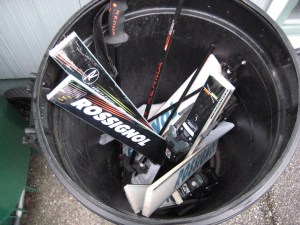
I killed my skis last night. Euthanized is perhaps a more technically accurate word, but since I chopped them up and threw them in the trash, it certainly felt more like a killing. They were nice skis: Rossi 4Cs 205s. A sweet ride in their day, but therein lies the rub: in their day. I knew they were old, and I was beginning to accept that my downhiller days might be behind me, so I had been researching places to donate or recycle them. After talking with a half a dozen local ski outfitters, it was apparent that these skis were so old that none of these shops would even work on them. Wha?But I just bought them at that big warehouse ski sale thing. In 1995. Even if I gave them to Goodwill, and somebody paid five bucks for them, the ski repair shops would still send them away. So I got out my trusty Sawzall® and hacked them into pieces that would fit in the trashcan.

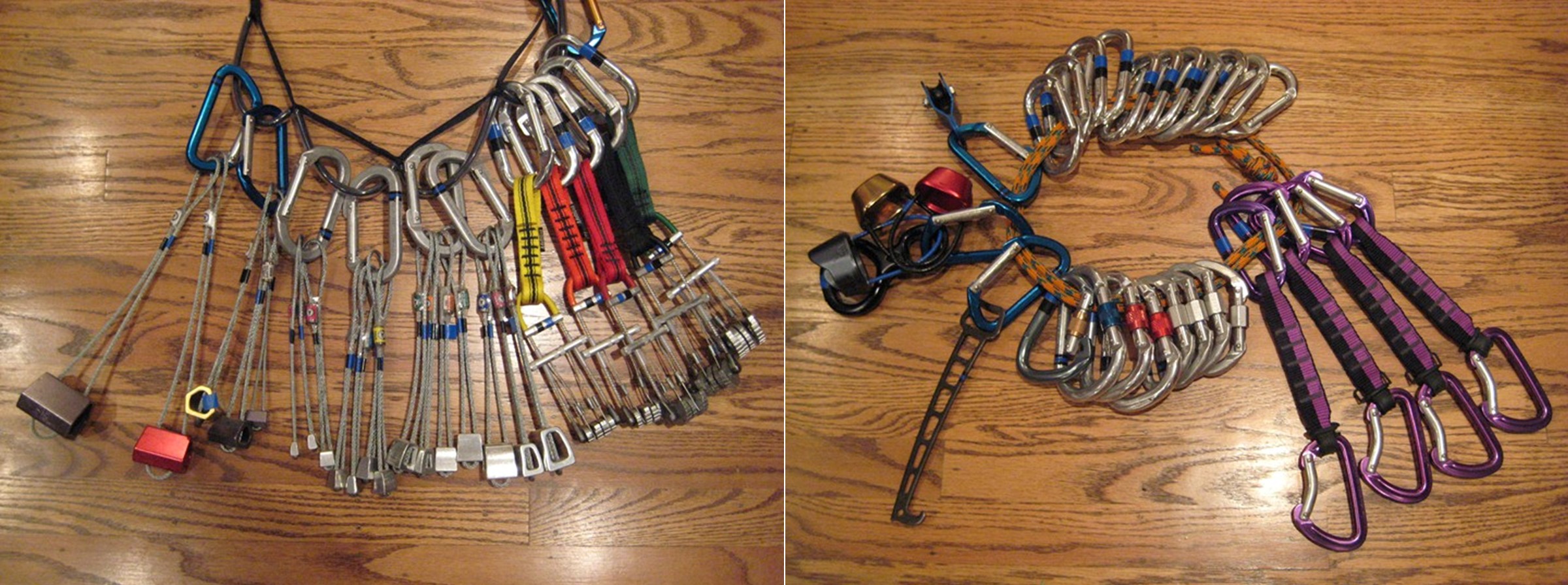
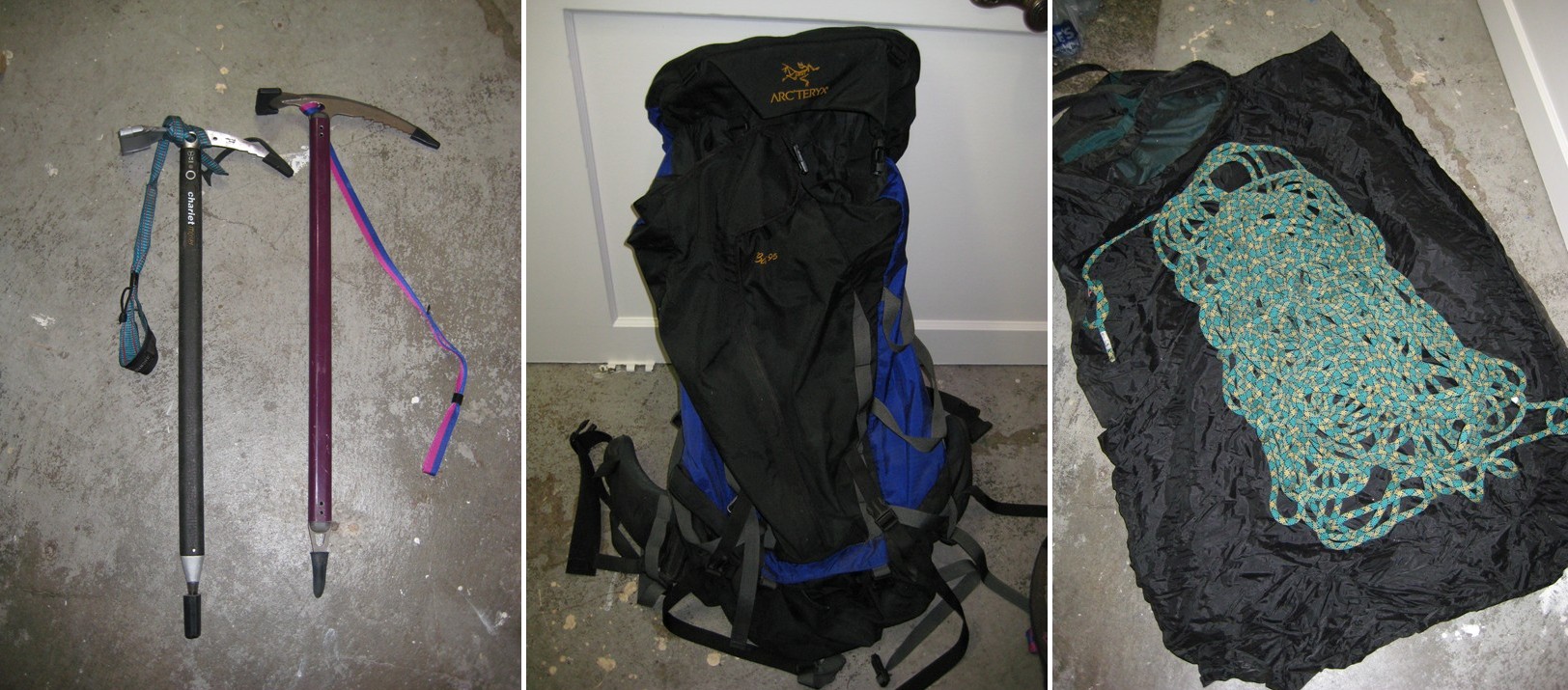
Fueled by this bit of destructive dementia, I pulled all my rock and alpine climbing equipment off my gear wall. Like used skis, there’s not a huge donation market for this type of gear, so I sorted it into “save”, “sell”, and “trash” piles. I put the few small items left in the “save” pile away (perhaps most metaphorically significant: my compass), and filled a can with the trash items (helmets, harnesses, slings, runners, rappel gloves, Texas Prusiks, hero loops and other climbing minutiae that is either specifically personal or difficult to assess damage/wear and remaining useful life). I splayed the “sell” stuff out on the floor, took pictures of it, and posted it for sale to the climbing network at my employer. Even at 9:30 PM on a Sunday night, it took all of five minutes for the lot of it to be spoken for.  All my rock gear, ice axes, ropes, my big overnight pack – all of it gone in minutes for pennies on the dollar.

The watershed event that set this abrupt, ostensibly anti-sporting  goods episode in motion actually happened more than a year ago. My favorite  mountaineering jacket (a North Face Mountain Light, in loud, obnoxious yellow) had given up the ghost after more than a decade of thrashing about in the Northwest outdoors. No amount of washing or treating could restore the waterproofing. It was dead. I went to the local North Face store intent on replacing it, but found that it was no longer available in yellow. As I really wanted yellow (forget “blending in” or “visual noise” – brother, if I’m in trouble in the wilderness I want to be SEEN), I started looking at the next model up. I was having trouble deciding, then the salesperson dropped the bombshell question: What type of activities would I be doing?

Shit. Don’t ask me that. At one time, I would have had a multitude of answers: I mountain bike, I ski, I hike, I climb, and I teach mountaineering first aid. I wear this level of gear for go, not for show. I’m part of that “authentic” climber clique that makes fun of people who buy technical climbing jackets to stay dry in the rain between the Range Rover and the preschool. I’m hardcore, bitches. That’s what I wanted to say. But in truth, I was someone who used to do all those things, but hadn’t been on a route, a trail, or even in the gym in nearly seven years. I was about to spend between three and five hundred dollars on essentially a rain shell that I would use to stay dry between my house, my car, and my place of employment. I had become the type of person I used to smugly ridicule, and I left the store without buying anything.

A little over ten years ago, near the peak of my outdoor activity level, I damaged my back while working on a home remodel project. Backs and knees are slow to recover from injury, but after a long process of physical therapy, steroid injections and rest, my back seemed strong enough to return to my favorite wilderness pursuits. I started Pilates, then road cycling, then hiking, and then moved back into alpine climbing. In the spring of 2004, I re-aggravated the injury during self-arrest practice on a climbing trip. For those not familiar, self-arrest is the process of using your body, an ice axe, and crampons to stop yourself from tumbling down a snow or ice-covered slope in the event you (or fellow climbers to whom you may be roped) fall. Because you can’t predict which way you will fall, you practice arresting from all configurations – face up, face down, head upslope, head downslope, alone, and in roped groups. The face up and head downslope position requires an aggressive pivot/flip maneuver to right yourself, and puts a lot of stress on the lower back. On about my third repetition in this position, I felt something tweak, and called it good for the day. I knew I had injured myself on this trip, but didn’t realize the extent. Long story short, I had ruptured the disc between my L5 and S1 vertebrae. That was the effective end of my climbing career – actually pretty much the end of my physical recreation – but I held on to all my gear on the assumption that my back would come around again.

Fast-forward seven years to another remodeling project. Though additional injections, regular doses of anti-inflammatories and monthly visits to a manual physiotherapist have kept the chronic pain down to a dull roar, my back has never really recovered to the point where I could resume my former level or types of outdoor exercise. Remodeling has a way of bringing out discussions between my wife and I about change, and about how we use the things that occupy space in our home. Spring always makes me restless for the outdoors, and facing another season of watching my gear gather dust compounded the restlessness. I’m still not exactly sure what brought things to a head this past weekend, or what pushed me over the edge into action. Mostly it was just a small voice inside that said, “it’s time”.

I will miss my gear. It saw me safely up and down trails, crags and mountains all over the Northwest for many years. While part of me is happy that all this equipment is now in the hands of people who will use it rather than just let it hang on a wall, it’s incredibly sad to have to acknowledge that this chapter of my life appears to be over. Part of me feels angry and cheated. I did not willingly or consciously trade my stoppers, cams and snow anchors for a CPAP machine, diabetes medication and hearing aids. Part of me knows that rock climbing in particular is predominately a sport of the young, and that this day would have come anyway, though another part of me would have preferred to walk away on different terms.

So what is the lesson? There seem to be several: Your body is both strong and fragile in many ways, and it will let you know when it’s time to switch to other activities. Pay attention to what it’s saying. Don’t judge it too harshly if it can no longer do all the things you want it to do. Mourn the loss and move on. Maintain perspective. While this chronic pain is difficult, it’s nothing compared to what some other people battle every day. Try to focus on and be grateful for what you can do, as opposed to what you can’t. At some point, it also seems wiser and healthier to live your life as it is, not necessarily the way it used to be or in unrequited longing for it to be different. To quote the sagacious Wayne Campbell: “Live in the now!” I freely admit that I fail regularly at all of these. Acceptance, as I’m learning, is apparently a full-time gig.

For the first three-quarters of my life I was an athlete. Now I am trying to adjust to being something else, and having it not feel like something less, and this gear purge seems like a necessary step. In the interim, I did buy a new Mountain Light jacket. In all black. Denial? Grief? Sure – all the above. So when you see someone wearing North Face gear who may not look like your idea of a dedicated outdoor enthusiast, don’t sweat it. They may be a broken, middle-aged former climber, or they may just like the brand or the look. Worry about your choices, not theirs. Save your energy for something different – put it into working on that smooth carve turn, or sticking that dyno, or enjoying the luxurious vitality that comes from simply being outside.

Trees

(Orignally published via Facebook on September 9, 2010)

“For in the true nature of things, if we rightly consider, every green tree is far more glorious than if it were made of gold and silver” – Martin Luther

I have always lived among trees. From the oak, walnut and almond orchards of my hometown, to years of camping in forests of sequoias and redwoods, to the firs and cedars of my current home in the Pacific Northwest, trees have always been part of my personal provincial landscape. I feel oddly uncomfortable in barren terrain, and climbing above treeline on mountaineering adventures is always a mystical process of leaving the known and familiar. Given this historical grounding, it seemed reasonable that I felt a bit of trepidation when we decided to remove two ailing fruit trees from our yard this summer.

In discussing the proposition with friends and neighbors, I found that while they generally agreed with my reasons for wanting to do such a thing, they were nearly all hesitant to actually endorse the action, as if they might later be found complicit in some misdeed. What drives this uneasiness when it comes to removing trees? While there is arguable nobility and moral clarity in the sacrifice of a diseased tree to save companions or the larger forest, any lesser objective seems to speak to more superficial motives. In one sense, the felling of a tree can be considered a simple act of industry: the conversion of raw materials into either fuel or the constituent elements of another structure. Rearranging the arboreal topography to improve a view or to create a more pleasing visual prospect nudges our aim more in the direction of selfishness. Removal to arrest spreading or surfacing roots that threaten driveways or encroach on buried pipelines applies at least the façade of justified utility over self-interest, as does taking out a storm-weakened tree located too close to the house for comfort. Yet somehow even the most justified and defensible actions relative to trees can still leave us with tinges of guilt and even grief.

I think the wariness comes from two main sources. I believe that to some degree we each harbor the notion that we cannot act against nature with impunity, and thus we inherently fear karmic consequences. Eastern thought applies as much import to the intent as to the action, and I think this compels some of us to move more slowly and deliberately when it comes to permanently altering the landscape. Removing a tree is not a choice that can be undone.

I also believe that we see trees as essential symbols; ancient emblems of endurance and permanence. Throughout history we have accorded them the power to house spirits and grant wishes, and have made them the center of myths and even religions. We wrap ourselves in their metaphor, and speak of “branching out” and of “putting down roots.” As a result, we have become appropriately uncertain about imposing our will on them. They are living things of natural beauty, that over time have staked a literal and binding claim to the space they occupy. Whether planted with a gardener’s conscious intent, or a grown from a serendipitous wind-blown seed, they chronicle the years with undulating rings and soundlessly churn away in their timeless photosynthetic rhythm. They are watchers and guardians; silent observers of the parade of time. They offer us myriad gifts, from scalable geometries that allow fleeting escapes from gravity, to aesthetic beauty, functional shade, and even nourishment in the form of fruit and oxygen. Even in deconstructed death they have the ability to warm our homes and cook our food. They embrace the seasons and bend to the light without complaint, and yet their reward is often to succumb to infestation or a landscaper’s whim. On some level, we potentially equate their destruction with irreverent waste and desecration, as in the tearing down of a venerable old building of historical significance.

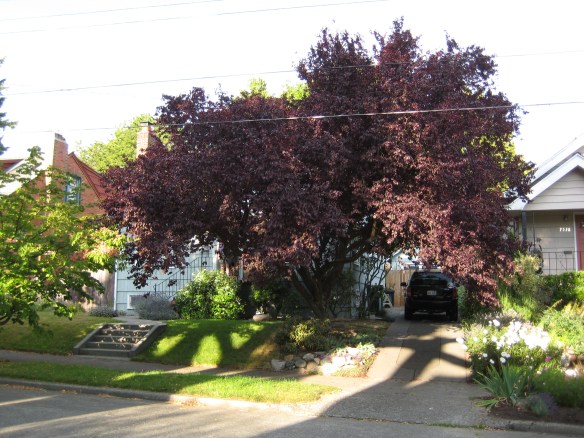
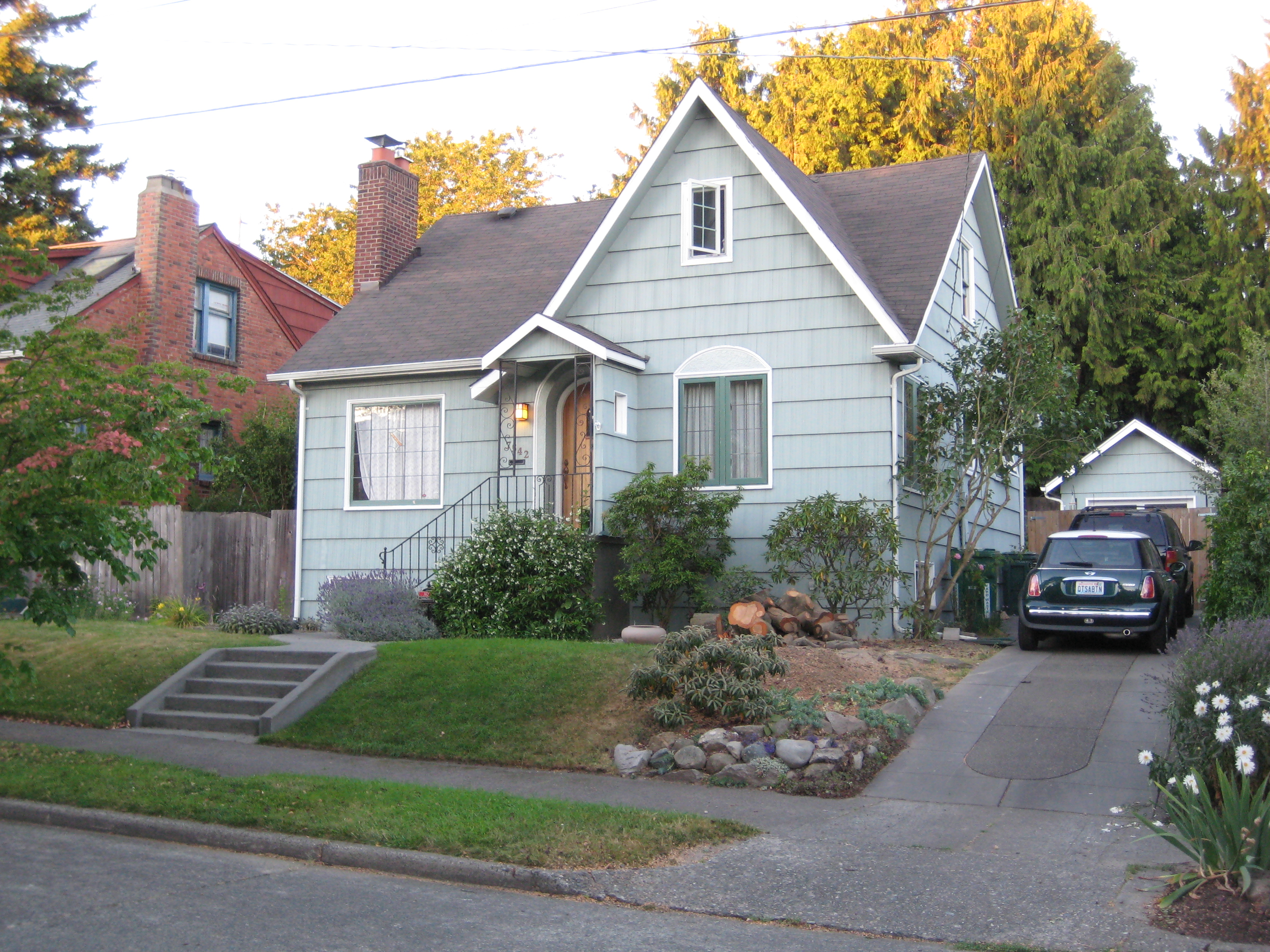
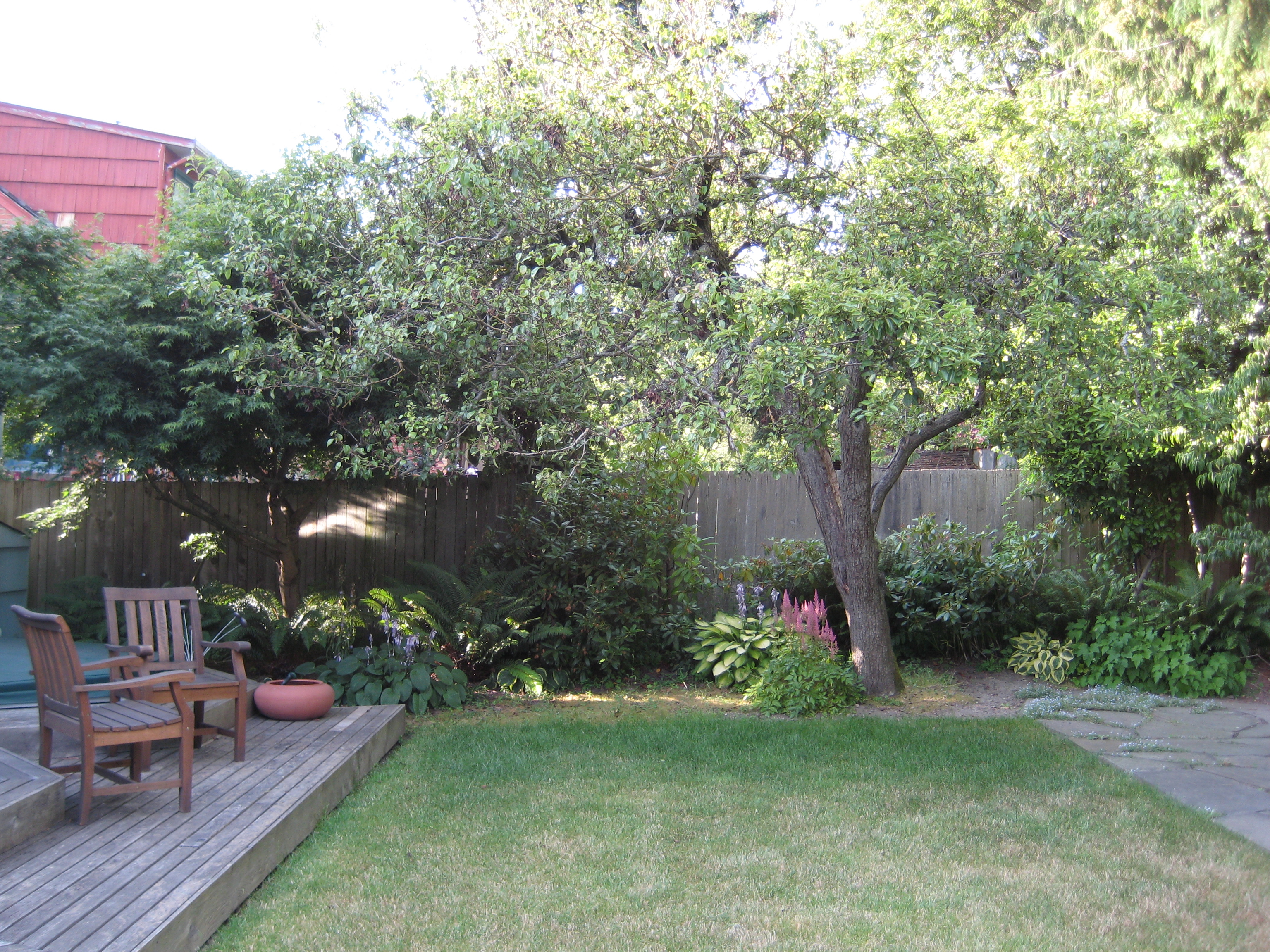
The two trees — a fruitless plum and a multi-varietal pear — are gone now, brought down with a violent and jarring swiftness. The maple, dogwood and holly in the back yard can certainly breathe easier and gather more sun in the absence of the pear, and the evening light coming in the front windows is now softly abundant and unfiltered by the plum. But in the spaces where these two natural edifices spent nearly half a century, there remains a silence born of sadness and a newly-wrought incompleteness; an almost palpable sense of what was. By any measure or reckoning, their removal is ultimately a loss.

Circles and Cycles

(originally published via Facebook on August 30, 2010)

This weekend I was acutely aware of the passage of time. Friday marked the twentieth anniversary of Stevie Ray Vaughn’s death, and as I stared at my idle and dusty guitars it occurred to me that I have now accumulated an impressive and ever-expanding collection of memories that are more than twenty years old. The thought endured Saturday morning as I moved and stacked firewood for the coming winter, and I could tell the weather now has the slightest chill to it, and the local trees are starting to show hints of fall color. I have very distinct childhood memories of going to the Sierra Nevada foothills every fall and clearing brush for firewood, watching my father and uncle wield chainsaws like paintbrushes, nimbly limbing and sectioning the fallen timber into fireplace-sized logs, and scribing a large “X” on the end of each log to help in splitting after the wood had seasoned. My father passed away more than twelve years ago, and I can’t as much as look at a firelog or a woodpile without thinking of him.

Saturday night we stopped by the J&M Café and Cardroom for dinner on our way to the Sounders soccer game. The J&M was the first bar I ever visited in Seattle, another event now separated from the present by more than twenty years. For many years the J&M was a regular stop on our Pioneer Square social circuit, but I don’t think I’ve been there in nearly ten years. Very different now. Walking back through Pioneer Square after the game, we were dismayed at the number of stores and clubs that were closed or had turned over, and were further saddened that in some cases we couldn’t recall exactly what had been there before.

Sunday night we had a woman that Jess knew professionally and her husband over for drinks and appetizers on the boat. The sun is setting earlier and earlier now, and we had to don sweaters and fleeces before long. From among the glasses of wine and stories of travel and sailing it emerged that not only did she know the place where I spent most of my teenage years, she had actually attended our cross-county rival school and graduated the same year, and that at some point in time nearly thirty years ago, she and I stood on opposite of sides of the same high school football field in a small town in Northern California, a world away from our lives now.

I certainly believe that you can go home again, that the past is a worn and comfortable mantle made all the more endearing by its threadbare complexion, but there is danger in looking back too often or lingering too long. I suppose the trick is to give the past its rightful due, but also to accept the here and now, conscious that the current moment holds the next twenty years of memories.